S
Suzanne Scacca
Guest
As a web designer, certain soft skills can help you level up in areas like client management and user experience design. Let’s see how reading fiction could help you gain skills like communication and critical thinking.
A couple years back, I shared a list of nonfiction books that web designers should read. Nonfiction reading—even when it doesn’t explicitly speak to the act of web design—can be very aspirational and motivational. It’s also been associated with benefits like stress reduction and skills-building.
But what about fiction reading? Can designers benefit from reading made-up stories instead of writing that’s based on facts and validated insights? According to researchers, they can.
So, today, let’s look at the benefits of reading fiction and how it can help you in your work as a web designer. I’ll also provide some examples of genres and books that can help you unlock each benefit.
Researchers have been fascinated by the act of reading and its benefits on people for a long time. In addition to being an enjoyable pastime for many people, it can also help build skills that will make you a better designer.
Here’s how:
Smithsonian Magazine has a good roundup of the research done to support this theory. What’s interesting is that researchers don’t just have mental/emotional studies to back it up either.
Researchers have looked at the physical skulls and brain structures of people who were early readers. They found that their brains tended to have:
If you haven’t had a lifelong reading practice, that doesn’t mean you’ve missed out on these brain-boosting benefits. Studies have found that reading improves cognitive performance and can even minimize the risk of cognitive decline.
Recommended Reading:
I’d say any sort of habitual reading practice would help achieve this benefit. But if you’re looking for books that will strengthen your brain’s ability to process information and make connections, consider reading mysteries and thrillers.
Kiss the Girls by James Patterson is a great book for this. Even if you’ve seen the film, there are tons of surprises in the book to keep you engaged and trying to think two steps ahead of the killer.
Also consider challenging your focus and patience with longer novels like the ones on this list. Or if fantasy and science fiction is your thing, consider getting into a series. You need to have a really good memory to keep up with a fiction series, so this is another way to keep you sharp.
Communication is one of the most critical soft skills for designers.
If you struggle to convey your thoughts or motivations as it relates to your work, collaboration is going to be difficult with team members. What’s more, if you can’t confidently communicate with your clients or managers, you’re going to have a hard time getting them to trust your decisions and judgment.
It goes both ways, too. Being able to communicate isn’t just about the words coming out of your mouth. You need to be able to listen and truly understand what the other person is telling you.
Reading fiction is a good way to improve your language processing and communication skills. Studies demonstrate over and over that there is a correlation between reading (specifically fiction) and language capabilities.
According to Raymond A. Mar, a Professor of Psychology:
Recommended Reading:
I think that short story collections are always a great option if you’re looking to bolster your communication skills. There are many lessons you can learn from this story format.
For starters, you’ll get exposed to different voices and pacing. Exposure to varied storytelling techniques will help you identify the right kind of language for the context (be it communicating with clients or writing content for end users).
Also, short stories teach you how to say more with less. In general, I find them to be simpler in terms of vocabulary. Novelists have more room and time to impress us with flourishes of language and metaphor. But short story writers know that they’re limited in space and time, and have a tendency to communicate more efficiently.
The collection I’d recommend designers pick up is called Disruptions by Steven Millhauser. A lot of what he writes initially seems like he’s painting a portrait of ordinary lives. The stories are simply told, but often veer off into strange territory. My personal favorite is “The Summer of Ladders.”
I think any short story by Edgar Allen Poe would also be helpful in this regard. Although his lexicon is a bit more complex than modern authors, his pacing and tension-building are worth examining.
In user experience design, your aim is to create a clear and intuitive path for the user to reach their goal. Although there is an ideal path to conversion that you carve out for them, the paths your users take aren’t always linear.
Take a website for a SaaS product. Realistically, it could take users numerous visits before they decide to pay for a subscription. And they may deviate from the path to explore supplementary pages before they convert.
That’s why websites are so information-rich. We need to offer users different pathways as they gather information along their journey to conversion.
Is this so different from the world-building in some fiction stories?
When we read rich fictional tales, we become absorbed in the plot and in the characters’ lives. But these stories are so rarely told in a straight line. Authors may have us jumping back and forth between characters and even timelines.
As we learn more about the characters and the world they move about in, we become invested in seeing things through to the end. This is similar to the process of user experience design and creating a “story” that makes prospective users want to join us on the journey.
Recommended Reading:
If you’re looking for inspirational world-building, there are so many books I can suggest. That said, there are two books that use visual storytelling that I think would be especially beneficial for web designers.
One I am particularly fond of is House of Leaves by Mark Z. Danielewski. It is a story within a story within a story. And the story at the core of it all is about a man who discovers a door that shouldn’t be inside his home and what happens when he journeys past it.
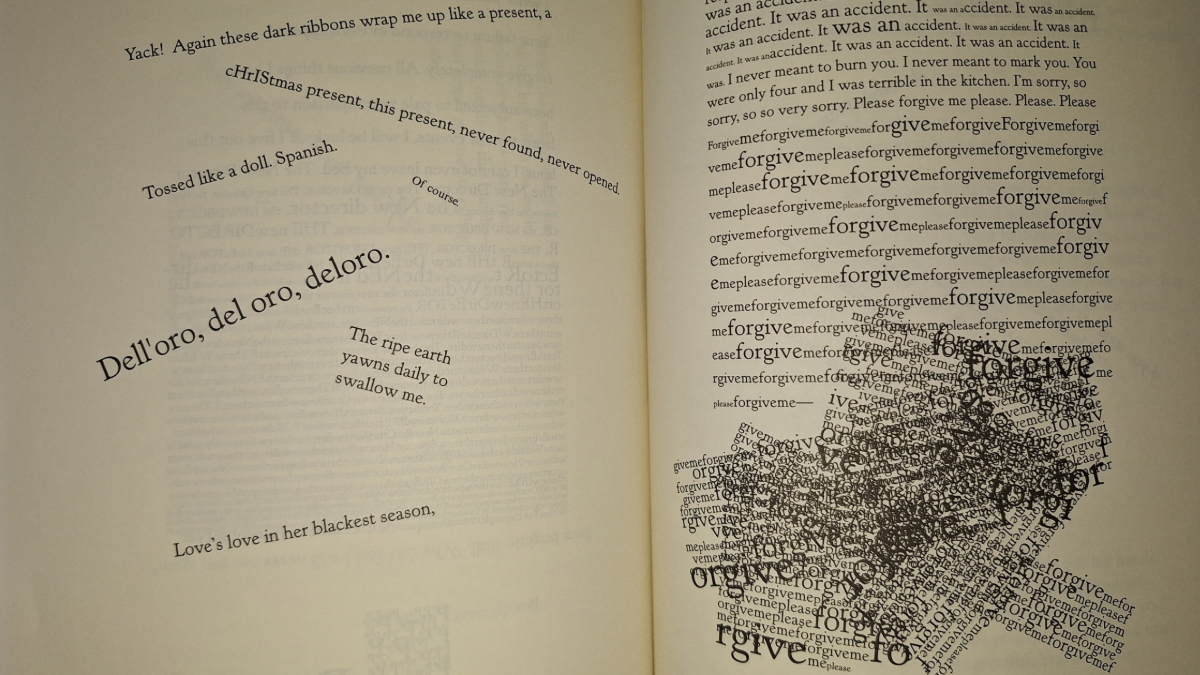
I won’t tell you more about the story, but I will tell you this: It’s one of the most visually fascinating books I’ve ever read. The author uses white space, color and formatting to simulate different sensations throughout the story. It’s a must-read for designers.
Another one I’d recommend is the graphic novel Watchmen by Alan Moore.
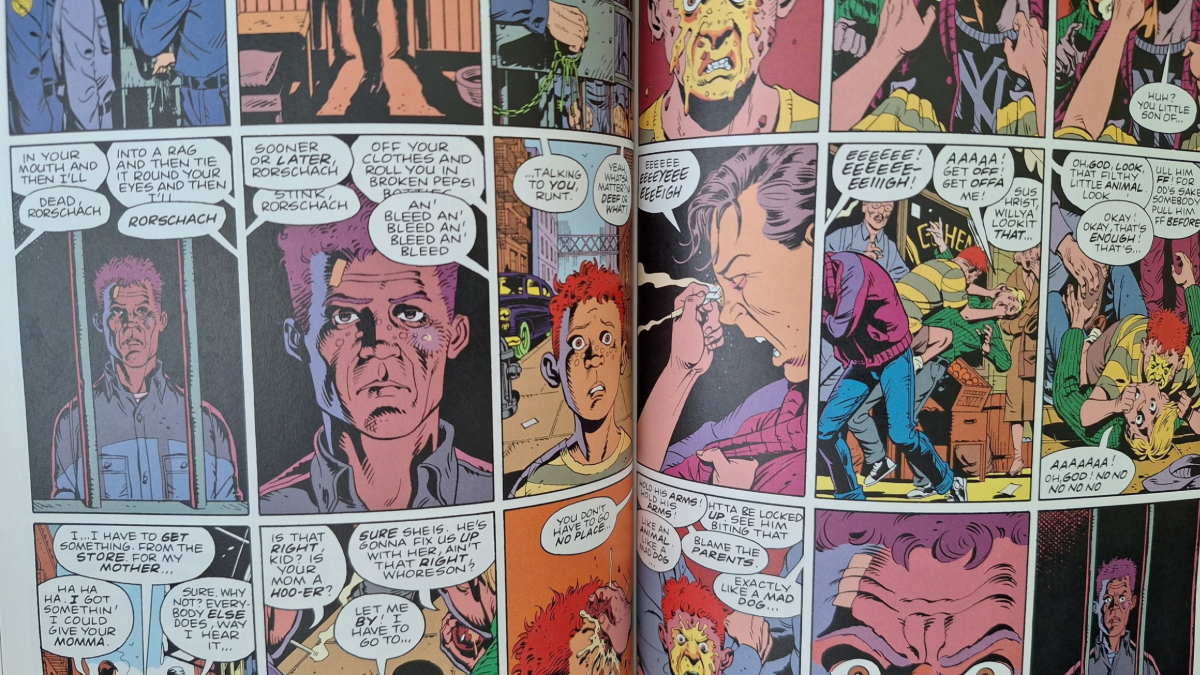
In this book, we explore an alternate timeline where masked heroes (and one very blue superhero) navigate a world that no longer wants them. If you’re interested in creating website copy that’s more succinct and action-driven, that’s another reason why this book is a must-read.
A study was done back in 2012 at The University of Tennessee to determine the relationship between reading and thinking. Specifically, they looked at the correlation between voluntary reading and how it improved skills like reasoning, analysis and inference.
In the end, they found a significant and positive relationship between the two. They also discovered a positive correlation between voluntary reading and the students’ college GPA.
As a web designer, critical thinking is an essential skill to have. It’s what allows you to take the “problem” that a client or your manager brings to you and then to flesh out a solution for it.
When you read fiction, you’re introduced to all kinds of problem-solution scenarios. While you might not be able to draw from a specific problem in any one book you read, the act of reading itself broadens your knowledgebase. This combined with creativity and ingenuity is what enables you to find the right solution for whatever you’re working on.
Recommended Reading:
For this one, I’d recommend Exhalation by Ted Chiang. It’s a collection of short stories that include the one the movie Arrival is based on.
Now, Chiang is one of the smartest authors I’ve come across. Educated at Brown University, he has a B.S. in computer science and works part-time as a technical writer. In this article, Chiang describes his process of writing fiction:
I recommend this book and his writing for a couple of reasons. If you enjoy science fiction and like stories that push past the limits of what you know, this is a good book to challenge your critical thinking skills. I also think that, being a computer science major and technical writer, he crafts his stories in a way that more technical-minded individuals can appreciate.
Empathy is the benefit most commonly touted when it comes to reading fiction, and it makes sense. Unlike reading nonfiction, which can often feel like you’re attending a lecture, fiction allows you to immerse yourself into other worlds and lives.
If you don’t have empathy or compassion, it’s going to be very difficult to get through many works of fiction. That said, researchers suggest that reading fiction can help those capabilities flourish even more.
As Marianna Pogosyan, Ph.D., explains:
Without the ability to relate to other perspectives, it can be difficult to build a brand or a product for someone else. So empathy and open-mindedness are essential skills for a web designer to have.
Recommended Reading:
While there is nothing wrong with a little light reading, it’s also important to expose yourself to stories that challenge you emotionally and even philosophically. Literary fiction is really good for this. I’d argue that dystopian fiction is as well.
In terms of recommendations, Blindness by Jose Saramago is one worth checking out. The story is about an epidemic of blindness and what happens to society as a result.
I’d also recommend Flowers for Algernon by Daniel Keyes. It tells the story of a man who undergoes a surgery to improve his IQ, and how his life and relationships change as a result.
As a web designer, you’ll likely encounter clients and companies that you have very little knowledge of. Or perhaps you’re building digital experiences for users with whom you have very little in common. By being able to step into their shoes (even just as a thought experiment), you can design more empathetic experiences and products for them.
All too often, I hear from people that they haven’t read anything since school. I think there’s a misconception about reading—that it’s something strictly for learning environments. But as a leisure activity, it actually comes with a lot of benefits, especially if you read fiction.
As we’ve seen here, lots of research has gone into fiction reading and what they’ve found is that readers gain a lot of useful life and work skills in the process. If you’re looking to work more efficiently, improve your communication skills and become a better user experience designer, consider starting a fiction reading practice today.
Interaction design does need to be meaningful, but it doesn’t just have to be for buttons or info cards. Here are six examples for how to give users meaningful interaction.
Continue reading...
A couple years back, I shared a list of nonfiction books that web designers should read. Nonfiction reading—even when it doesn’t explicitly speak to the act of web design—can be very aspirational and motivational. It’s also been associated with benefits like stress reduction and skills-building.
But what about fiction reading? Can designers benefit from reading made-up stories instead of writing that’s based on facts and validated insights? According to researchers, they can.
So, today, let’s look at the benefits of reading fiction and how it can help you in your work as a web designer. I’ll also provide some examples of genres and books that can help you unlock each benefit.
How Does Fiction Reading Benefit Your Work?
Researchers have been fascinated by the act of reading and its benefits on people for a long time. In addition to being an enjoyable pastime for many people, it can also help build skills that will make you a better designer.
Here’s how:
Reading Strengthens Your Brain
Smithsonian Magazine has a good roundup of the research done to support this theory. What’s interesting is that researchers don’t just have mental/emotional studies to back it up either.
Researchers have looked at the physical skulls and brain structures of people who were early readers. They found that their brains tended to have:
“[L]arger volumes and cortical areas in brain regions involved in learning, emotional regulation and cognition. Researchers have also found readers tend to have better connectivity in white matter—the highways through which nerve cells send messages—in areas involved in language processing, as well as increased cortical thickness in brain areas critical for language.”
If you haven’t had a lifelong reading practice, that doesn’t mean you’ve missed out on these brain-boosting benefits. Studies have found that reading improves cognitive performance and can even minimize the risk of cognitive decline.
Recommended Reading:
I’d say any sort of habitual reading practice would help achieve this benefit. But if you’re looking for books that will strengthen your brain’s ability to process information and make connections, consider reading mysteries and thrillers.
Kiss the Girls by James Patterson is a great book for this. Even if you’ve seen the film, there are tons of surprises in the book to keep you engaged and trying to think two steps ahead of the killer.
Also consider challenging your focus and patience with longer novels like the ones on this list. Or if fantasy and science fiction is your thing, consider getting into a series. You need to have a really good memory to keep up with a fiction series, so this is another way to keep you sharp.
Reading Fiction Improves Communication Skills
Communication is one of the most critical soft skills for designers.
If you struggle to convey your thoughts or motivations as it relates to your work, collaboration is going to be difficult with team members. What’s more, if you can’t confidently communicate with your clients or managers, you’re going to have a hard time getting them to trust your decisions and judgment.
It goes both ways, too. Being able to communicate isn’t just about the words coming out of your mouth. You need to be able to listen and truly understand what the other person is telling you.
Reading fiction is a good way to improve your language processing and communication skills. Studies demonstrate over and over that there is a correlation between reading (specifically fiction) and language capabilities.
According to Raymond A. Mar, a Professor of Psychology:
“These improved language skills in turn result in all kinds of important advantages, such as doing better at school, attaining a higher level of education and being more successful at work.”
Recommended Reading:
I think that short story collections are always a great option if you’re looking to bolster your communication skills. There are many lessons you can learn from this story format.
For starters, you’ll get exposed to different voices and pacing. Exposure to varied storytelling techniques will help you identify the right kind of language for the context (be it communicating with clients or writing content for end users).
Also, short stories teach you how to say more with less. In general, I find them to be simpler in terms of vocabulary. Novelists have more room and time to impress us with flourishes of language and metaphor. But short story writers know that they’re limited in space and time, and have a tendency to communicate more efficiently.
The collection I’d recommend designers pick up is called Disruptions by Steven Millhauser. A lot of what he writes initially seems like he’s painting a portrait of ordinary lives. The stories are simply told, but often veer off into strange territory. My personal favorite is “The Summer of Ladders.”
I think any short story by Edgar Allen Poe would also be helpful in this regard. Although his lexicon is a bit more complex than modern authors, his pacing and tension-building are worth examining.
Fiction Reading Influences How You Build Digital ‘Worlds’
In user experience design, your aim is to create a clear and intuitive path for the user to reach their goal. Although there is an ideal path to conversion that you carve out for them, the paths your users take aren’t always linear.
Take a website for a SaaS product. Realistically, it could take users numerous visits before they decide to pay for a subscription. And they may deviate from the path to explore supplementary pages before they convert.
That’s why websites are so information-rich. We need to offer users different pathways as they gather information along their journey to conversion.
Is this so different from the world-building in some fiction stories?
When we read rich fictional tales, we become absorbed in the plot and in the characters’ lives. But these stories are so rarely told in a straight line. Authors may have us jumping back and forth between characters and even timelines.
As we learn more about the characters and the world they move about in, we become invested in seeing things through to the end. This is similar to the process of user experience design and creating a “story” that makes prospective users want to join us on the journey.
Recommended Reading:
If you’re looking for inspirational world-building, there are so many books I can suggest. That said, there are two books that use visual storytelling that I think would be especially beneficial for web designers.
One I am particularly fond of is House of Leaves by Mark Z. Danielewski. It is a story within a story within a story. And the story at the core of it all is about a man who discovers a door that shouldn’t be inside his home and what happens when he journeys past it.
I won’t tell you more about the story, but I will tell you this: It’s one of the most visually fascinating books I’ve ever read. The author uses white space, color and formatting to simulate different sensations throughout the story. It’s a must-read for designers.
Another one I’d recommend is the graphic novel Watchmen by Alan Moore.
In this book, we explore an alternate timeline where masked heroes (and one very blue superhero) navigate a world that no longer wants them. If you’re interested in creating website copy that’s more succinct and action-driven, that’s another reason why this book is a must-read.
Fiction Helps You Become a Better Problem Solver
A study was done back in 2012 at The University of Tennessee to determine the relationship between reading and thinking. Specifically, they looked at the correlation between voluntary reading and how it improved skills like reasoning, analysis and inference.
In the end, they found a significant and positive relationship between the two. They also discovered a positive correlation between voluntary reading and the students’ college GPA.
As a web designer, critical thinking is an essential skill to have. It’s what allows you to take the “problem” that a client or your manager brings to you and then to flesh out a solution for it.
When you read fiction, you’re introduced to all kinds of problem-solution scenarios. While you might not be able to draw from a specific problem in any one book you read, the act of reading itself broadens your knowledgebase. This combined with creativity and ingenuity is what enables you to find the right solution for whatever you’re working on.
Recommended Reading:
For this one, I’d recommend Exhalation by Ted Chiang. It’s a collection of short stories that include the one the movie Arrival is based on.
Now, Chiang is one of the smartest authors I’ve come across. Educated at Brown University, he has a B.S. in computer science and works part-time as a technical writer. In this article, Chiang describes his process of writing fiction:
“The way it usually works is that I have an idea that I’ve been turning over in my head for a long time … I think about different possible stories set in such a world; I can usually come up with a bunch of starting points, but I don’t know where those would go. It’s only when I come up with an ending that I can actually begin writing; I need to have my destination in mind. I don’t have the whole story worked out in detail, but I have a general sense of what needs to happen.”
I recommend this book and his writing for a couple of reasons. If you enjoy science fiction and like stories that push past the limits of what you know, this is a good book to challenge your critical thinking skills. I also think that, being a computer science major and technical writer, he crafts his stories in a way that more technical-minded individuals can appreciate.
Reading Fiction Increases Empathy
Empathy is the benefit most commonly touted when it comes to reading fiction, and it makes sense. Unlike reading nonfiction, which can often feel like you’re attending a lecture, fiction allows you to immerse yourself into other worlds and lives.
If you don’t have empathy or compassion, it’s going to be very difficult to get through many works of fiction. That said, researchers suggest that reading fiction can help those capabilities flourish even more.
As Marianna Pogosyan, Ph.D., explains:
“When we read fiction, we are asked to temporarily exit our identities and mentally step into different ones … y exploring other minds, we are given the opportunity to practice experiencing different emotions, thoughts and behaviors than what we otherwise live. When you find yourself re-engaging with the story and characters after you have finished reading a book, that’s when growth happens.”
Without the ability to relate to other perspectives, it can be difficult to build a brand or a product for someone else. So empathy and open-mindedness are essential skills for a web designer to have.
Recommended Reading:
While there is nothing wrong with a little light reading, it’s also important to expose yourself to stories that challenge you emotionally and even philosophically. Literary fiction is really good for this. I’d argue that dystopian fiction is as well.
In terms of recommendations, Blindness by Jose Saramago is one worth checking out. The story is about an epidemic of blindness and what happens to society as a result.
I’d also recommend Flowers for Algernon by Daniel Keyes. It tells the story of a man who undergoes a surgery to improve his IQ, and how his life and relationships change as a result.
As a web designer, you’ll likely encounter clients and companies that you have very little knowledge of. Or perhaps you’re building digital experiences for users with whom you have very little in common. By being able to step into their shoes (even just as a thought experiment), you can design more empathetic experiences and products for them.
Wrapping Up
All too often, I hear from people that they haven’t read anything since school. I think there’s a misconception about reading—that it’s something strictly for learning environments. But as a leisure activity, it actually comes with a lot of benefits, especially if you read fiction.
As we’ve seen here, lots of research has gone into fiction reading and what they’ve found is that readers gain a lot of useful life and work skills in the process. If you’re looking to work more efficiently, improve your communication skills and become a better user experience designer, consider starting a fiction reading practice today.
Does Interaction Design Always Have to Be Meaningful?
Interaction design does need to be meaningful, but it doesn’t just have to be for buttons or info cards. Here are six examples for how to give users meaningful interaction.
Continue reading...